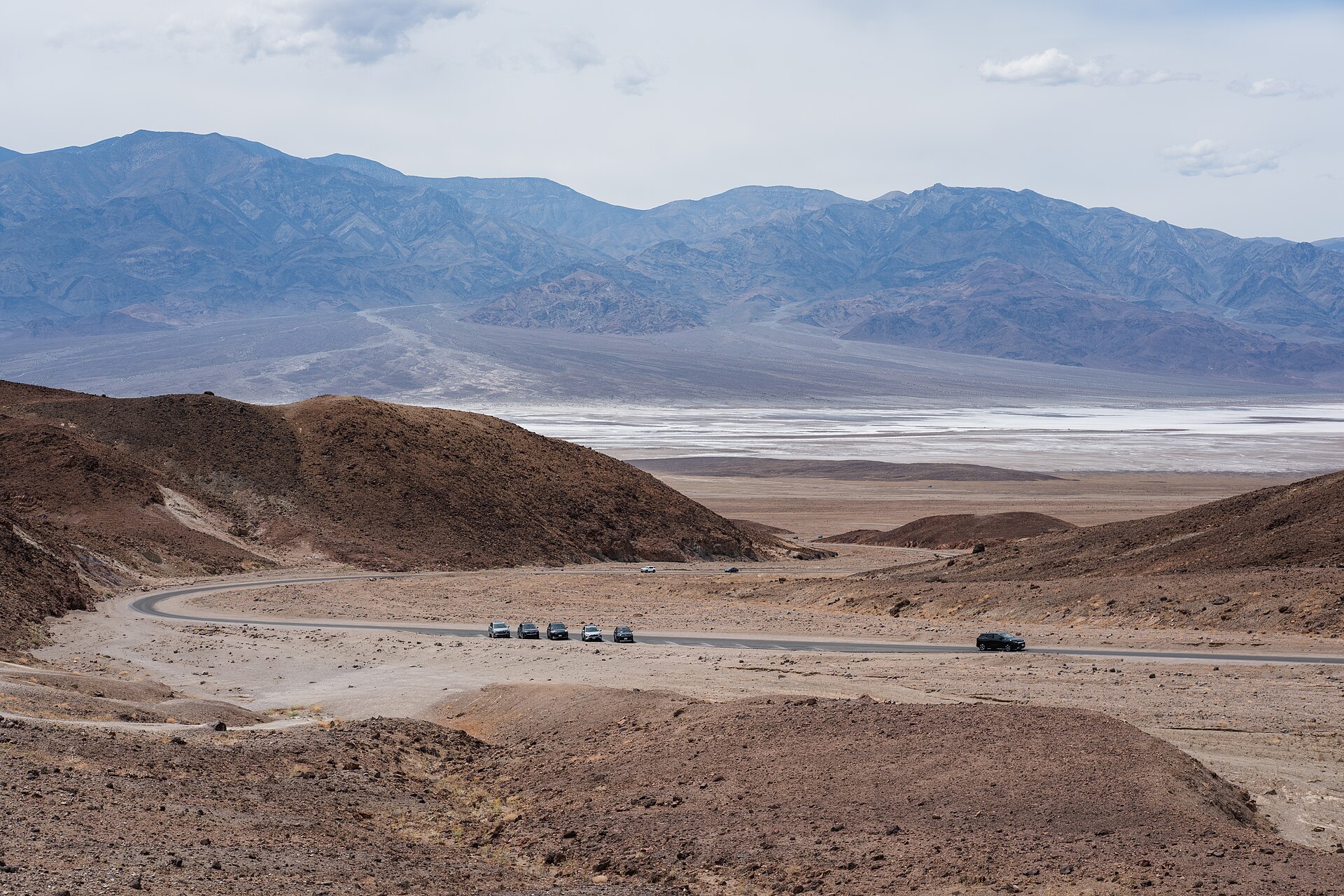
The tragedy began with a vehicle stuck on a remote road and ended after the men walked across exposed salt flats for help. Park officials say it underscores how quickly a breakdown can become life-threatening in Death Valley's summer heat.
Pierre Michel Formosa, a 68-year-old French tourist, died in Death Valley National Park in California after his vehicle became stuck in mud on Aug. 17, 2026. Formosa and a traveling companion became stranded in extreme heat that reached 116°F, then walked away from the vehicle to seek help across the salt flats.
The French tourist dies in a case that shows how a seemingly limited roadside problem can turn dangerous in Death Valley heat. The Inyo County coroner will determine Formosa’s official cause and manner of death, while the National Park Service has pointed to the park’s heat, isolation and long distances as major hazards.
A remote road became an emergency
According to the National Park Service, Formosa and his companion, both from France, were driving on West Side Road when their vehicle became stuck in mud near Queen of Sheba Mine Road.

No other vehicles were in the area. Rather than wait at the car, the two men began walking across salt flats toward Badwater Road in search of assistance.
That decision placed them in open terrain during one of the most dangerous conditions the park can offer: intense desert heat with little immediate shelter, limited communications and a long distance from help.
The walk ended before help arrived
After traveling about 1.3 miles, Formosa could not continue, the Park Service said. His companion continued toward Badwater Road, where a passing motorist eventually helped him.
The companion reported the incident at the Furnace Creek Visitor Center shortly after 2 p.m. National Park Service rangers and an Inyo County deputy began a search-and-rescue operation at about 2:13 p.m.
A California Highway Patrol helicopter joined the search and found Formosa later that afternoon about 1.5 miles from Badwater Road. He was pronounced dead at the scene, according to the agency.
Officials have not released a final medical determination. That distinction matters: temperatures reached 116°F that day, and heat was central to the circumstances described by the park, but the coroner has not yet formally ruled on the cause of death.
Why a stuck vehicle changes everything
Death Valley is often associated with record-breaking temperatures, but this incident was not simply a story about hot weather. It was also about the cascade that can follow when a vehicle becomes disabled far from a paved road.
A vehicle can provide shade, supplies and a large, visible object for searchers to locate. Once people leave it, they may lose those advantages while increasing their exposure to heat and dehydration.
The National Park Service says staying with a disabled vehicle is often the safest choice because it offers shelter and is easier for search teams to spot than a person on foot in open desert. “Often” is important: every emergency has its own conditions, but the agency’s guidance reflects the basic search-and-rescue reality in a vast landscape.
There is an understandable human impulse to walk for help when no one appears to be nearby. In a place where emergency response can take hours, however, the physical cost of that choice can rise rapidly, particularly at lower elevations during extreme heat.
Death Valley’s distances are deceptive
Death Valley National Park covers a huge area of remote terrain, with cell service that can be limited or nonexistent. Roads that look navigable can become difficult quickly, and backcountry conditions may change without warning.
The route in this case included a mud hazard, a reminder that desert travel is not defined only by dry ground. Rain, drainage, road damage and soft surfaces can all make a road impassable or leave a vehicle immobilized.
Park Superintendent Mike Reynolds called Formosa’s death a heartbreaking reminder that conditions can turn dangerous quickly. He said Death Valley’s heat, remoteness and distances can be hazardous regardless of a visitor’s experience.
That is why a map distance can be misleading. A mile or two on a shaded urban sidewalk is not comparable to a mile across salt flats in 116-degree conditions, especially after a mechanical or road emergency has disrupted a travel plan.
What the Park Service recommends
The Park Service’s advice for Death Valley visitors is practical, but its importance becomes clearer in an emergency such as this one. Preparation is meant to buy time when an itinerary breaks down.
- Check the route first: Review current road and weather conditions before departing, particularly for remote or unpaved roads.
- Use the right vehicle: Many backcountry roads require high clearance or four-wheel drive, and road conditions can change abruptly.
- Carry more water than expected: The park recommends at least one gallon per person per day, plus extra water for vehicle emergencies.
- Leave a trip plan: Tell someone where you are going and when you expect to return.
- Bring a communication backup: A satellite communicator or emergency beacon can be critical where a phone has no signal.
- Limit exposure during extreme heat: The agency urges visitors to stay on paved roads and avoid hiking at lower elevations during periods of intense heat.
None of those measures eliminates risk. They can, however, create options when a car cannot move and the nearest help is beyond walking distance.
Questions still await the coroner
The immediate sequence of events is clear from the Park Service account: a vehicle became stuck, two men walked for assistance, one could not continue, and a search located Formosa later that day.
What remains unresolved is the official medical finding. The Inyo County coroner will determine Formosa’s cause and manner of death, and no additional details about his condition, the vehicle or the precise road conditions have been released in the Park Service statement.
The larger takeaway does not depend on those pending findings. In Death Valley, a disabled vehicle can quickly become a survival situation. The safest response may run against instinct: preserve shade, preserve water, make the vehicle easier to find and have a way to signal for help before driving into country where help may be hours away.
Leave a Reply