The dispute is about more than airport sinks. It raises a larger question about when an accommodation for religious practice becomes, in the state’s view, unequal treatment at a publicly owned facility.
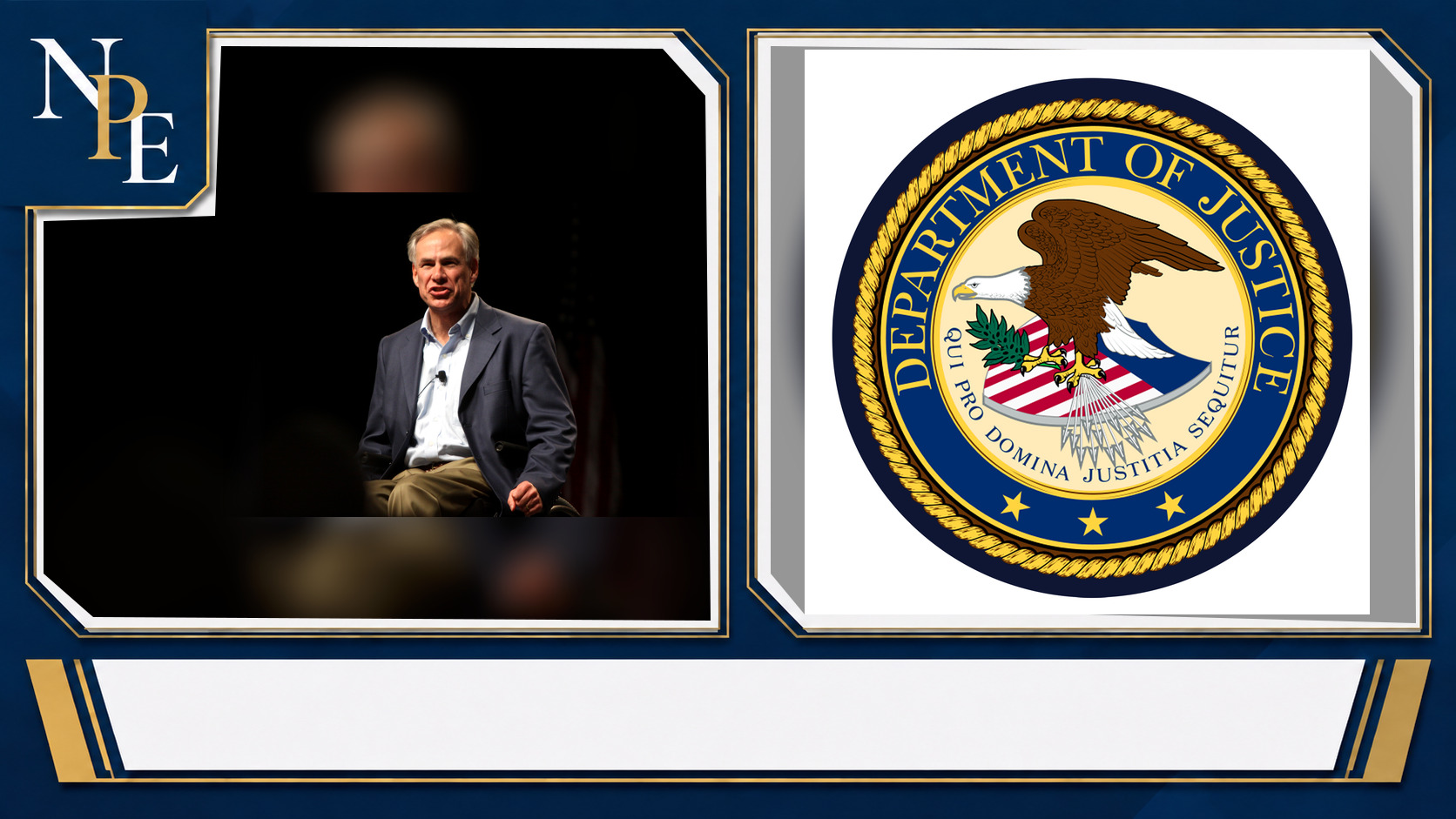
Texas Gov. Greg Abbott sought a federal probe on Friday, August 21, 2026, into facilities used for ritual washing before Islamic prayers at Dallas-Fort Worth International Airport and George Bush Intercontinental Airport in Houston. A Muslim group denounced Abbott’s move, which asks the U.S. Department of Justice to investigate the airport ablution facilities and decide whether they amount to religious discrimination.
The immediate issue is narrow: stations used for wudu, the washing ritual many Muslims perform before prayer. But Abbott’s referral puts a much broader question before federal officials: whether a public airport can provide a faith-specific accommodation without improperly favoring one religion.
Abbott sends the issue to DOJ
In an August 21 press release, Abbott said he had referred what his office called “discriminatory religious ablution facilities” at DFW and Houston’s George Bush Intercontinental, also known as IAH, to the Justice Department for investigation and enforcement.
Abbott argued that government-owned airports cannot give preferential treatment to a single religion. His office said the facilities were not interfaith chapels open to all travelers, but stations intended to serve Muslim passengers preparing for prayer.
The governor asked DOJ to review the facilities and take what he described as appropriate corrective action. The referral is a request for a federal review, not a finding that either airport violated the law.
Abbott’s office also said the federal government has primary authority over security and access inside airport terminals. Both airports receive federal funding, the governor said, making them subject to federal conditions and laws that prohibit discrimination.
What the washing stations are for
Wudu is a form of ritual purification performed before the five daily Muslim prayers. It generally involves washing the hands, arms, face, head and feet.
At airports, a purpose-built washing area can give travelers a more practical place to perform that ritual than a standard restroom sink. The facilities at the center of this dispute have been available for years at Texas’s two largest airports, according to reporting by The Washington Post.
That practical function is central to the disagreement. Supporters view the stations as an accommodation that allows Muslim travelers to observe a routine religious practice while passing through a major public transit hub.
Abbott’s position is that their religious purpose is exactly what creates a problem: public facilities, he argues, should not single out one faith for a dedicated benefit.
Muslim advocates reject discrimination claim
A Muslim group criticized Abbott’s request for a federal investigation, according to Reuters. The objection reflects a sharply different reading of the stations: not as a government endorsement of Islam, but as an effort to make a public space usable for people with a particular religious practice.
Legal experts quoted by The Washington Post disputed Abbott’s claim that the stations are discriminatory. Critics of the referral have also framed it as part of a wider political fight over Muslim visibility and religious accommodation in public life.
Those arguments do not erase the state’s concern about equal treatment. They do show why the case is likely to draw attention beyond aviation policy. The same facility can be described either as preferential treatment or as a limited accommodation, depending on how one defines government neutrality toward religion.
The available reporting does not indicate that the Justice Department has announced a decision on Abbott’s request. It also does not establish that the airports have been accused by federal officials of any violation.
The legal question is not simple
Public entities generally face two competing obligations in disputes like this. They may not use public resources to favor one religion over another, but they also cannot treat religious practice as uniquely unwelcome when comparable accommodations are available for other needs.
The details matter. A review could examine who can use the space, how it was funded, whether it is open to travelers beyond Muslims, what comparable facilities exist and whether the airports’ policies were designed to accommodate passengers rather than promote a faith.
Abbott’s press release emphasizes that the stations serve Muslims alone. Advocates for the facilities are likely to emphasize that a narrowly tailored amenity may address a specific need without compelling anyone else to participate or excluding them from ordinary airport services.
There is no broad principle that resolves every dispute over religious facilities in public spaces. Courts and government agencies often weigh the setting, the nature of the benefit and whether the government is acting evenhandedly.
DFW halted expansion plans
Abbott’s office said that after the state referral, DFW abandoned plans to install additional ablution facilities. The two existing stations at DFW and IAH remain at the core of the governor’s request to DOJ.
That development makes the federal inquiry consequential even before any formal response. A decision by DOJ to investigate, decline to act or issue guidance could influence how airports around the country approach prayer spaces, ritual-washing stations and other religion-related amenities.
Airports regularly try to serve travelers with different languages, diets, disabilities, family needs and faith traditions. The challenge is deciding when an amenity is a reasonable response to a real need and when officials believe it crosses into impermissible favoritism.
What remains unresolved
For now, the dispute has produced competing claims rather than a federal ruling. Abbott has asked DOJ to treat the facilities as discriminatory; Muslim advocates and some legal experts say the stations are a legitimate religious accommodation.
Key unanswered questions include whether DOJ will open an investigation, how airport officials will defend the purpose and operation of the stations, and whether any federal action will affect the existing facilities at DFW and IAH.
The controversy is also a reminder that airport infrastructure can become a flashpoint in national debates over religion. A small washing area used before prayer has become a dispute over equal access, public authority and who gets to define neutrality in a shared civic space.
Leave a Reply