
A proposed downtown Miami land transfer has become a test of whether public property can support a sitting president’s library foundation when commercial development may be part of the project. The court has not ruled on the constitutional claims.
The U.S. Department of Justice is defending a proposed Miami land donation for Donald Trump’s presidential library after Miami residents sued, alleging the transfer violates the Constitution. The DOJ says the lawsuit’s theory could also implicate Barack Obama and Joe Biden.
The case, filed May 13, 2026, and publicly reported May 14, concerns a 2.63-acre downtown Miami parcel. Its importance extends beyond the Trump Miami Library: the dispute asks when state-backed land for a presidential library may become an unconstitutional financial benefit to a sitting president.
A 2.63-acre site under scrutiny
The parcel is owned by Miami Dade College and sits beside the Freedom Tower, a prominent downtown landmark. The building once served as a resource center for Cuban refugees and is now operated by the college as a museum.
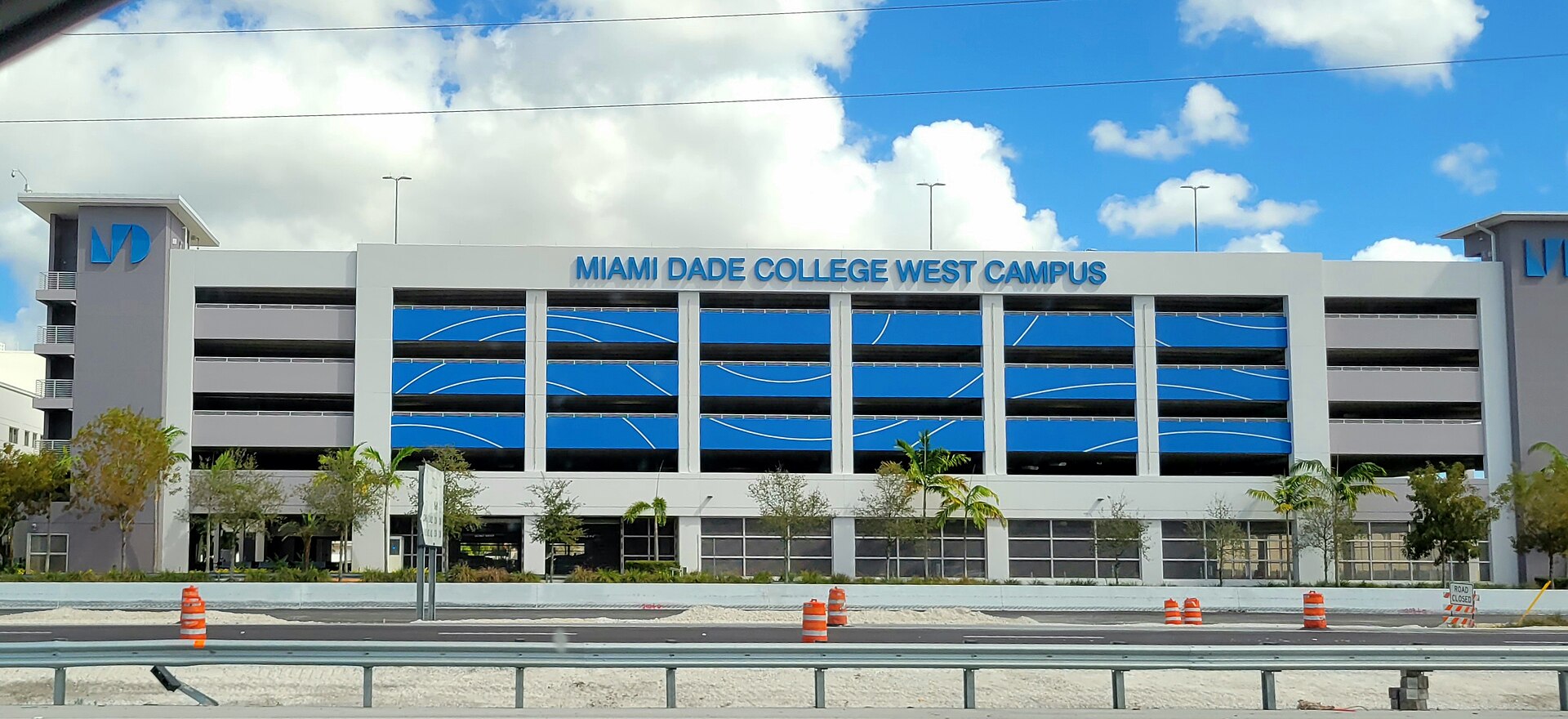
According to the Associated Press, Florida Gov. Ron DeSantis moved in September 2025 to transfer the property to Trump’s presidential library foundation. The Miami-Dade County property appraiser valued the land at about $67 million in 2025, while appraisers cited in the lawsuit suggested it could bring substantially more in a sale.
That valuation has made the local land-use stakes difficult to separate from the constitutional debate. Plaintiffs argue the site could otherwise serve Miami Dade College students or broader downtown needs; one plaintiff organization had hoped it could become an urban farm.
The claim residents are making
Miami residents, a Miami Dade College student and a local nonprofit sued Trump, Miami Dade College and Florida officials, including DeSantis. They contend that the proposed transfer violates the Constitution’s Domestic Emoluments Clause.
The clause bars states from giving a sitting president a financial benefit. The challengers’ position is that transferring a valuable public parcel to Trump’s library foundation could still enrich Trump personally while he is president.
In their view, the question is not answered simply by calling the recipient a library foundation. They point to the property’s value, the state officials involved in the proposed transfer and the possibility that the project could include revenue-producing uses.
Why a hotel changes the debate
The proposed development may reach well beyond a conventional archive or museum. The AP reported that Trump and his son Eric Trump have shared plans for a large tower that would house the library.
An AI-generated promotional video released in March depicted a presidential jet in the lobby, a gold escalator, a ballroom, a replica Oval Office, rooftop gardens and a large gold statue of Trump. Those images are not construction plans and do not establish that each feature will be built, but they show the scale of the vision presented for the site.
Trump also told reporters in March that the project could be an office but was “most likely going to be a hotel with a beautiful building underneath.” For the plaintiffs, that possibility matters because a hotel or other for-profit operation could create a more direct link between a public land transfer and private economic benefit.
DOJ points to Obama and Biden
The Justice Department has called the residents’ constitutional theory “illogical,” arguing that its logic could extend to arrangements involving the presidential libraries of Obama and Biden. The government’s argument focuses on the breadth of the rule the plaintiffs propose.
Presidential libraries have long involved private foundations, fundraising and partnerships with landholders, institutions and public officials. From the DOJ’s perspective, treating this type of assistance as an unconstitutional state benefit could place other presidential-library arrangements in doubt.
That comparison does not mean the DOJ says every library project is the same as the proposed Miami development. Rather, it frames the legal disagreement over whether a gift to a library foundation should be treated as a benefit to the officeholder or as support for a legally separate civic institution.
The details each side emphasizes
The plaintiffs are expected to argue that the project’s particular circumstances set it apart: Trump is a sitting president, the property has substantial value, state officials are involved, and a hotel or other commercial venture has been discussed.
Supporters can point to a different set of considerations. Presidential libraries are intended to preserve records and shape a president’s public legacy, and a major complex could bring visitors, jobs and development to downtown Miami.
The unresolved issue is whether those public-facing possibilities carry legal weight if the arrangement may also financially benefit the president. The eventual analysis may depend less on the word “library” than on ownership, control, financing and any direct economic relationship between Trump and the foundation.
No ruling has been issued
The case remains at an early stage, and no court has decided whether the land transfer violates the Constitution. Before reaching the merits, the court may also address threshold issues, including whether each plaintiff has standing to challenge the transaction.
Key facts remain unclear in the public record, including the final design, the precise ownership structure, the scope of commercial operations and the financial relationship between Trump and the library foundation. The White House did not respond to the AP’s request for comment when the lawsuit was filed.
For now, the conflict turns on competing views of the same transfer. Miami residents say the state cannot provide a valuable asset to a sitting president’s foundation if it may enrich him. The DOJ says that interpretation stretches the Constitution far enough to raise questions about Obama, Biden and other presidential-library arrangements.
Leave a Reply